Our research concentrates on the written and oral knowledge traditions of South Sulawesi, with an emphasis on material that is poorly catalogued, at risk, or has not been studied for its content.
Lontara Pabbura is the branch of the Bugis manuscript tradition concerned with healing: the identification of illness, the preparation and use of remedies, and the practices surrounding treatment. Written in Lontara script, these texts circulate largely in private and family collections rather than institutional ones, and comparatively few have been transliterated or studied for their medical content.
Manuscripts in private hands face humidity, insect damage and dispersal through inheritance. The people able to read Lontara fluently, and to explain what a passage means in practice, are not being replaced at the rate they are being lost. Documentation delayed is, in a number of cases we have already encountered, documentation forgone.
Findings from the project have been presented at international conferences, including the Congress of Global Chinese Medicine and allied meetings, where the Bugis material can be set against other Asian textual medical traditions.
Manuscripts remain with their custodians. Documentation is carried out with informed consent, and custodians receive a copy of any imaging and transliteration produced from their material. Where a knowledge holder contributes substantively to interpretation, we regard that as scholarly collaboration.
Documentation at any scale needs somewhere to put the results. Rather than wait for that infrastructure to exist, we are building it.
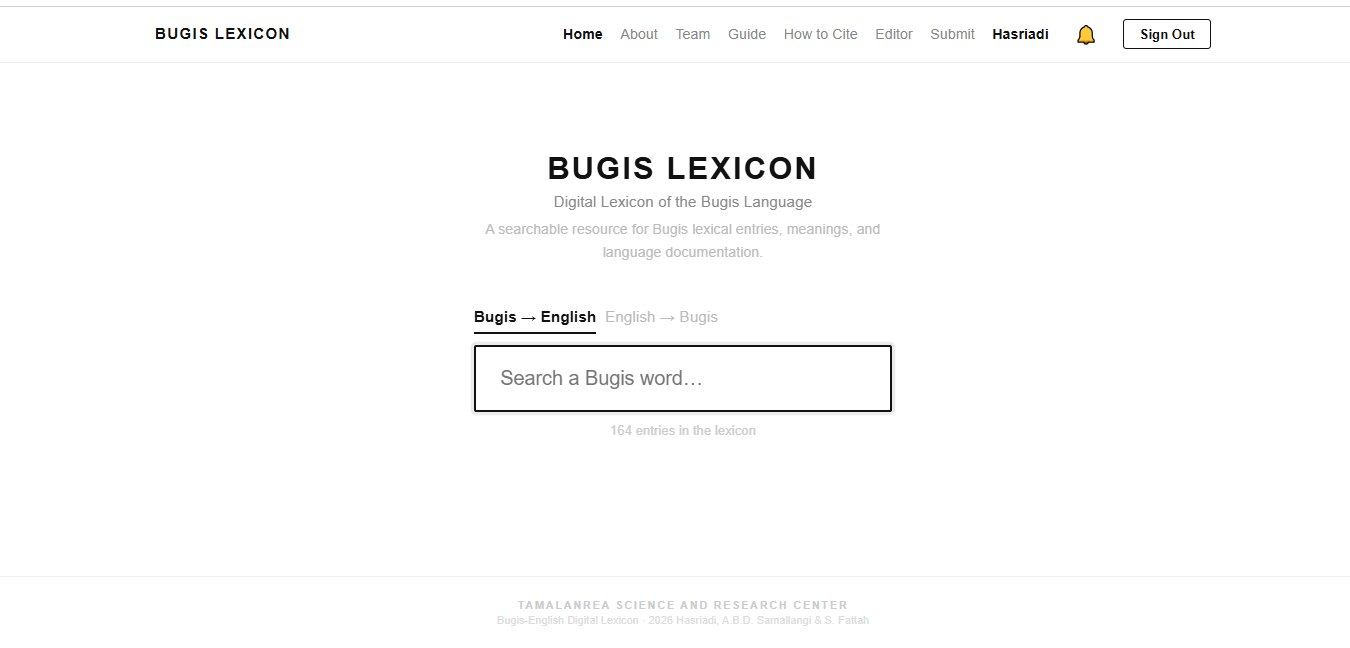
A searchable digital lexicon of the Bugis language, holding lexical entries, meanings and supporting documentation. Built to be queried in both directions — Bugis to English and English to Bugis — so that it serves speakers and researchers equally.
The lexicon underpins the transcription work: reading a manuscript is far quicker when the vocabulary it uses is already recorded and citable.
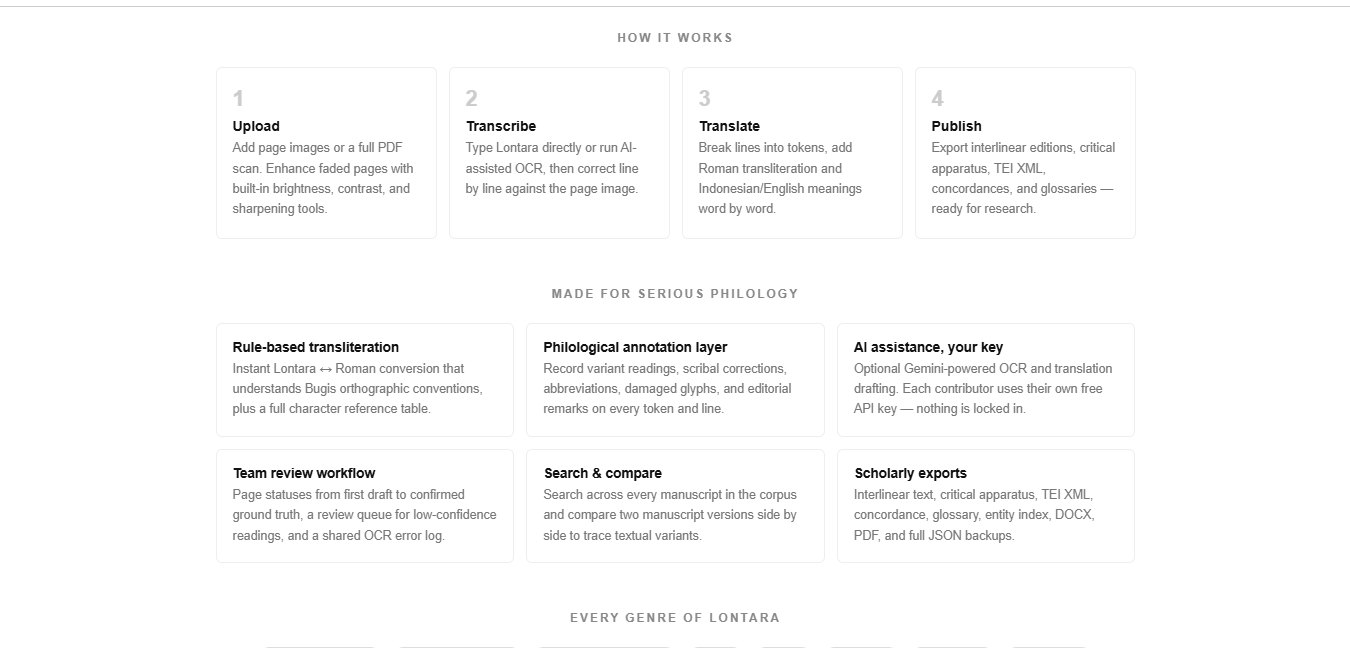
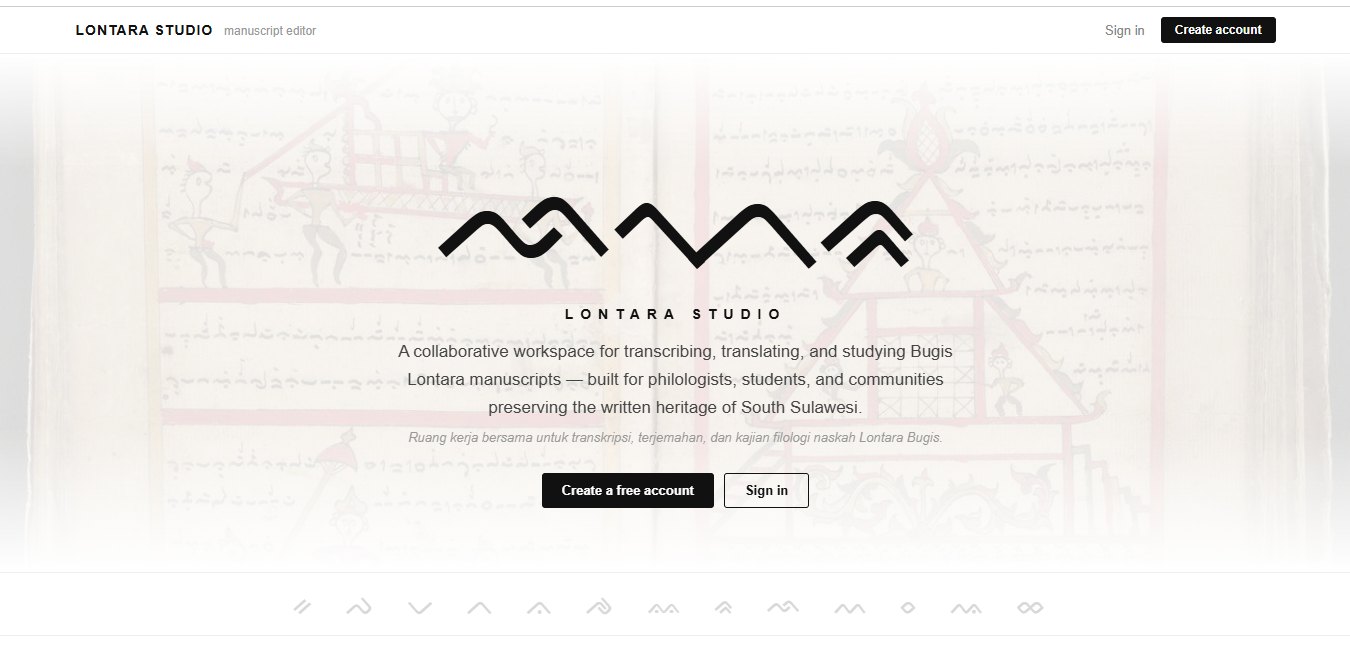
A shared workspace for transcribing, translating and studying Bugis Lontara manuscripts, built for philologists, students and the communities holding the material. Several people can work on the same manuscript, with the transcription, the translation and the original image kept alongside one another.
The problem it addresses is practical. Transcription has usually meant one scholar, one manuscript, and a file nobody else can see. There is far more material than that arrangement can ever get through.
Drawn from the Center's mandate under Articles 5 and 6 of its Articles of Association.
Locating and describing naskah kuno held outside institutional collections, across genres beyond medicine.
Recording traditional knowledge transmitted orally rather than in writing, and the relationship between the two.
Studying how knowledge was taught and transmitted locally before and alongside formal schooling, and what that offers now.
The Center publishes its own peer-reviewed journal through Tamalanrea Research Press.
Wallacea is where Asian and Australian faunas meet, and also where the Austronesian and Papuan language families meet and interleave. The journal publishes research on the environment, health, education and language of that region, treating philological scholarship as central to understanding it rather than peripheral.
There are no author fees. Every article is open access under CC BY 4.0, carries a permanent DOI, and is archived independently.
The Pabbura work has more manuscripts in front of it than hands to read them. If you work on philology, manuscripts, ethnomedicine or linguistics, or you can bring imaging or conservation capacity, we would like to hear from you.