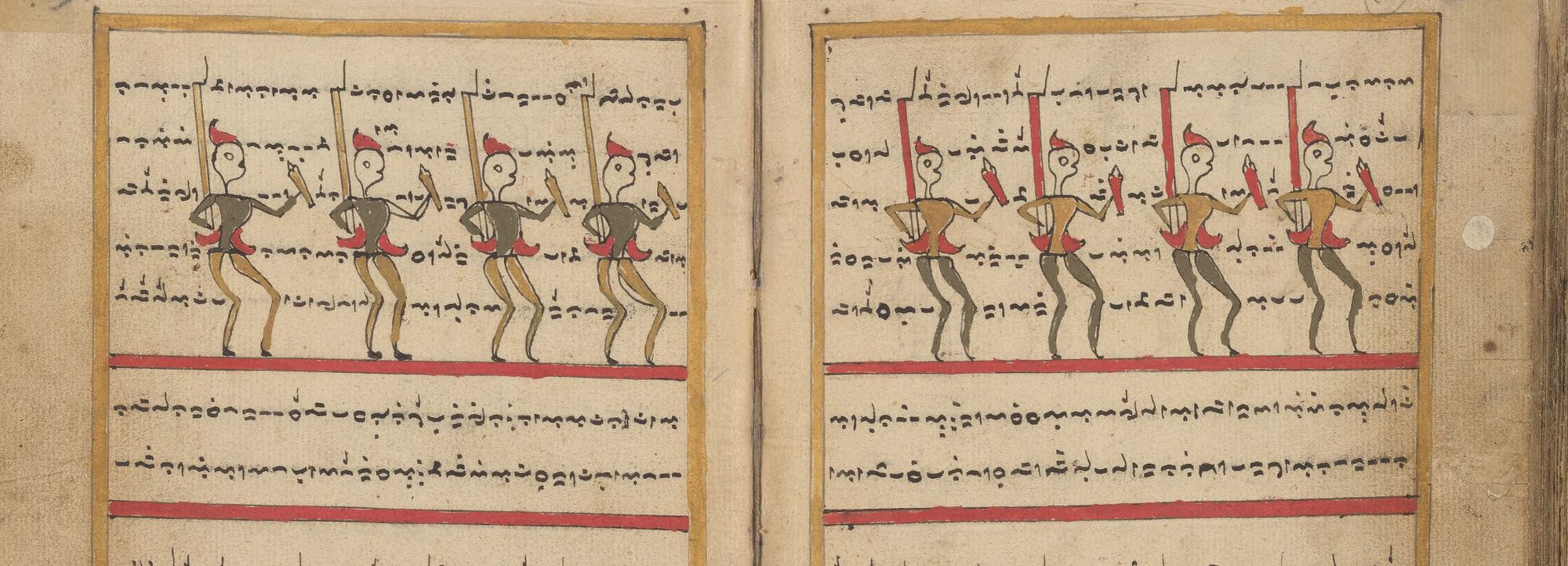
Zeeuwse Bibliotheek, KZGW Handschriftenverzameling cat. no. 8018
Tamalanrea Science and Research Center works on the manuscript traditions, indigenous knowledge and historical education systems of South Sulawesi and eastern Indonesia — recording what survives, asking what it still has to teach, and building the tools that make that work possible.
A great deal of what South Sulawesi knows about itself is written in Lontara script, on palm leaf and paper, in private hands.
Much of it has never been catalogued, transliterated or read by anyone outside the family that holds it. Some of it will not survive another generation of humidity, insects and dispersal.
The Center exists to document that material properly, to study it as a body of knowledge rather than as artefact alone, and to make the results available to researchers internationally while keeping them accessible to the communities they came from.
Through research and innovation, sustaining the existence, continuity and present-day relevance of local knowledge.
Information on community knowledge, whether held in ancient manuscripts (naskah kuno) or in traditional oral form.
Documenting and exploring the values of historical local education, and what they offer the present.
A study of Lontara Pabbura, the Bugis manuscript tradition concerned with healing, materia medica and the treatment of illness. The work covers documentation and transliteration of surviving manuscripts, analysis of the therapeutic knowledge they record, and the relationship between that knowledge and the plants and practices still in use in South Sulawesi today.
Findings from the project have been presented at international conferences, including the Congress of Global Chinese Medicine and allied meetings.
Two open tools built to carry the work: a searchable lexicon of the Bugis language, and a collaborative workspace where manuscripts can be transcribed and translated by several people at once rather than one scholar at a time.
The Center holds legal personality under Indonesian law as a registered association, approved by the Ministry of Law and based in Makassar.
In practice that means we can sign research agreements, hold grant funding, and be named as an institutional partner — the things an overseas collaborator usually needs to check first.
If you work on philology, manuscripts, ethnomedicine, linguistics or the history of education — or your institution holds Indonesian manuscript collections — there is probably something here worth talking about.
What we need most is technical capacity: imaging, conservation, digital cataloguing. Much of the material we are documenting will not wait.